Exhibitions

Katie Tomlinson
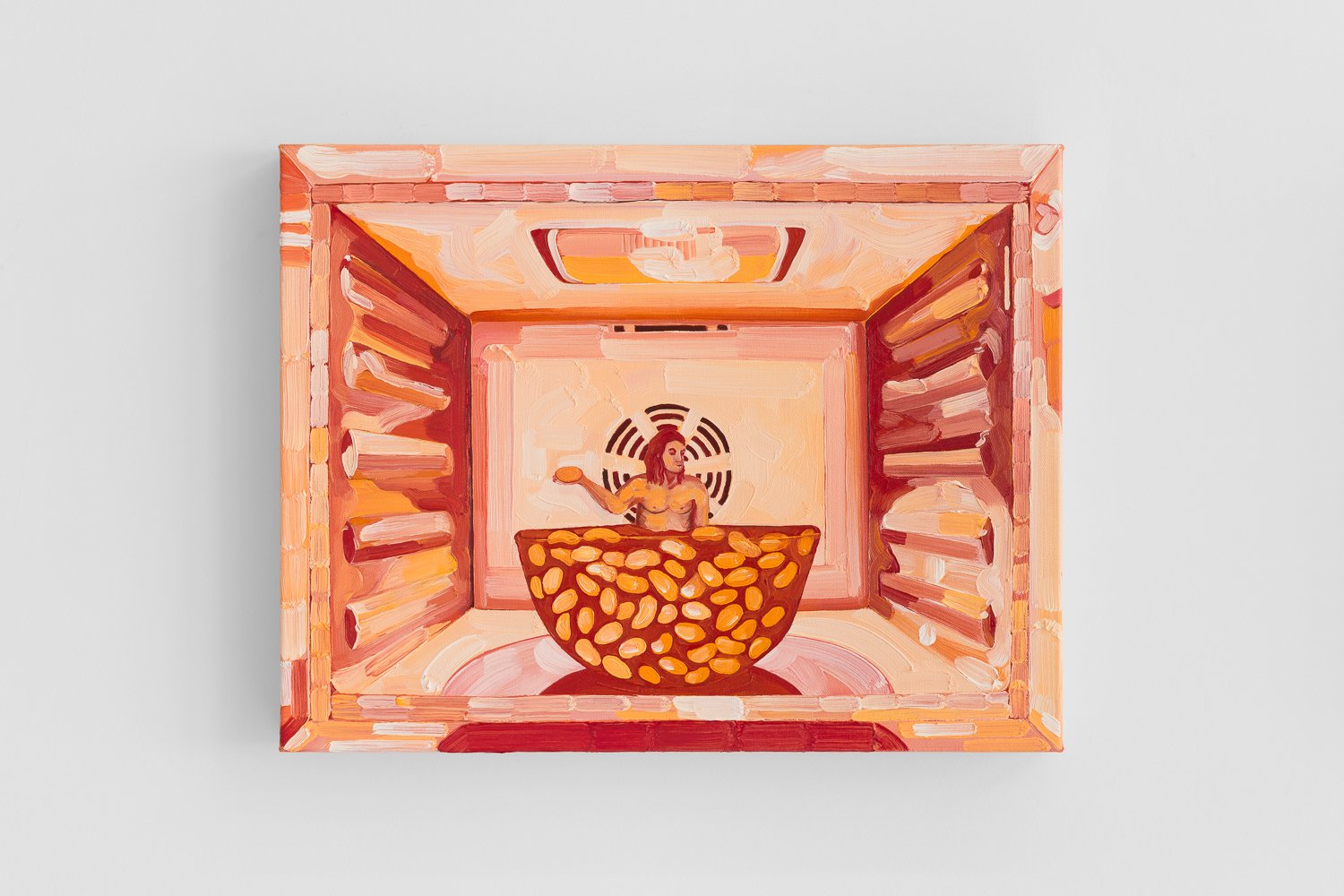
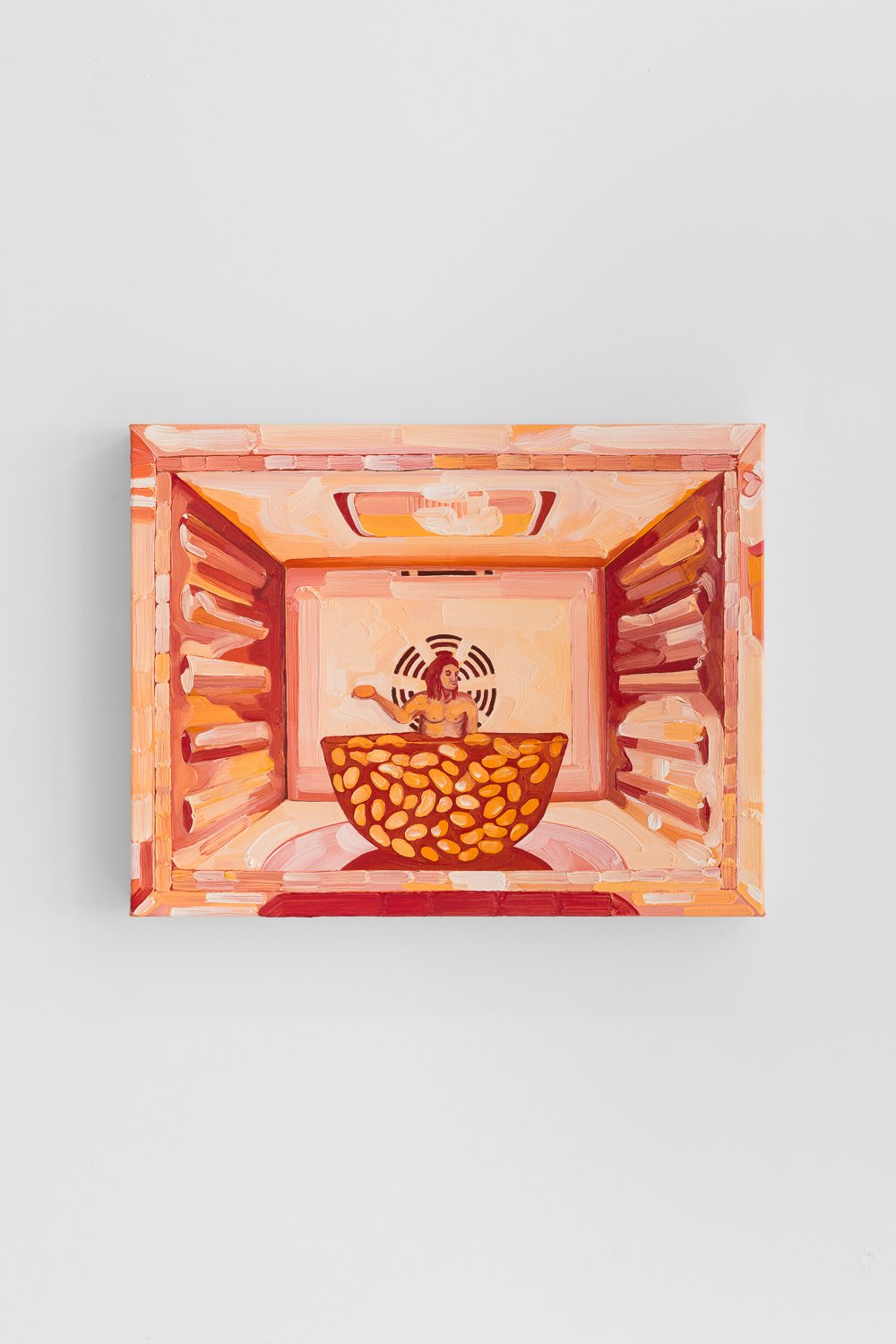
Rude Imitation
Oil on Panel
25 x 20cm
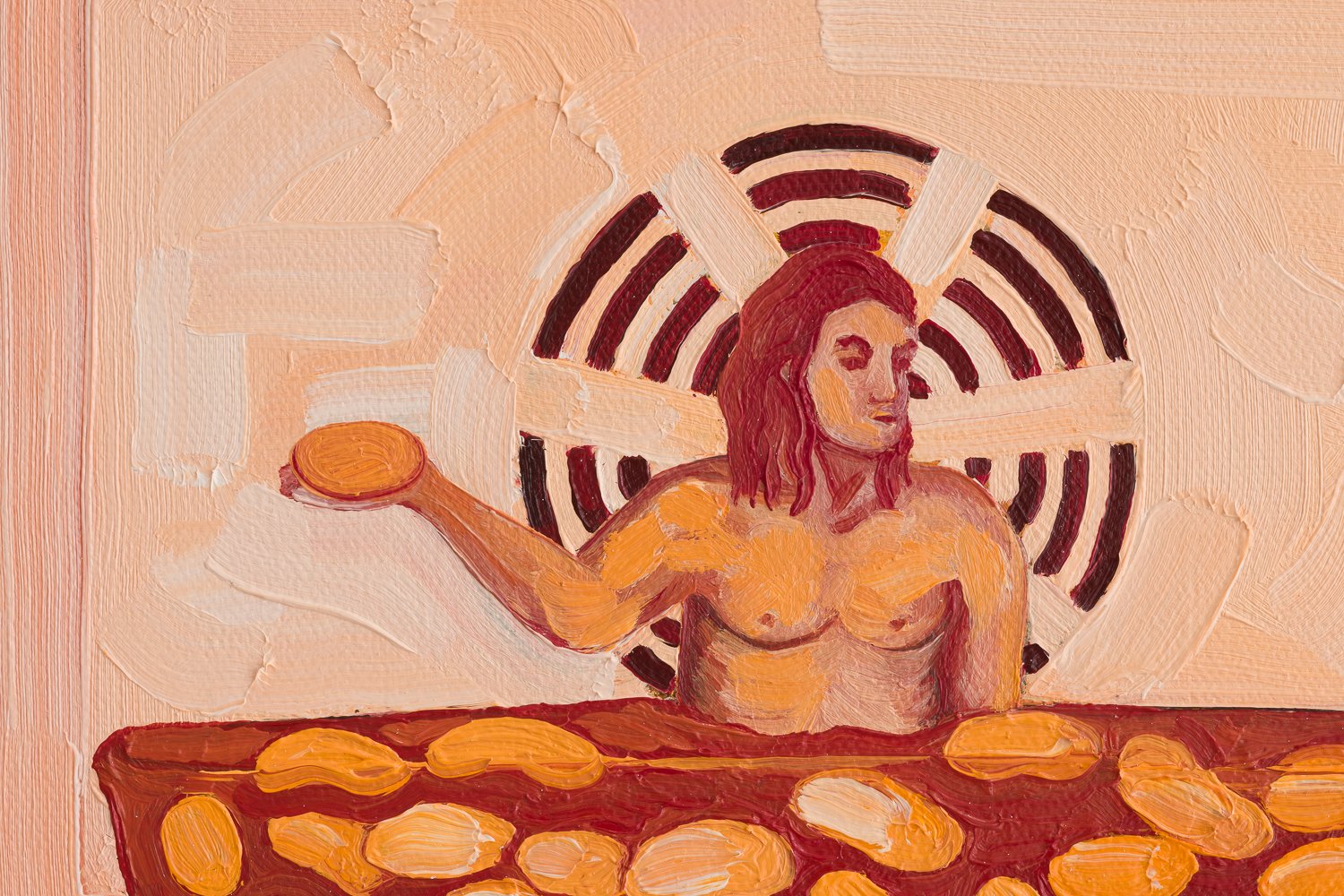
In Rude Imitation, Tomlinson reworks a figure from Monsieur Thévenot’s De Arte Natandi (1696), itself heavily influenced by Everard Digby’s De Arte Natandi (1587), one of the earliest printed treatises on swimming. Produced in a period when bodies were frequently recovered from London’s New River, these manuals combined instruction with survival, offering diagrams and techniques for “keeping oneself above water.” Though the original figure is labelled in the manual as a man, Tomlinson is drawn to the figure’s feminised appearance, which was originally used to suggest vulnerability and an inability to swim.
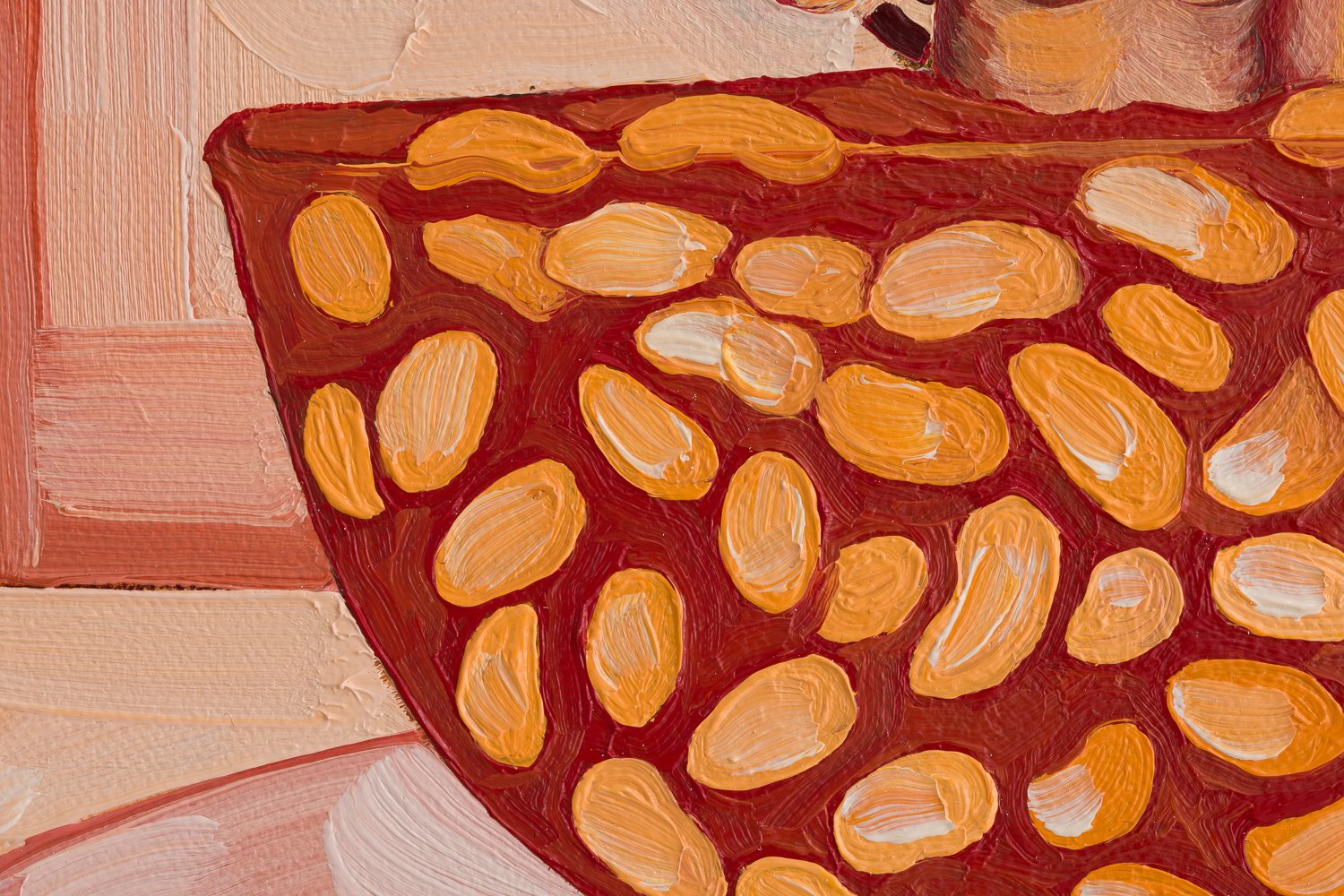
In Tomlinson’s painting, the swimmer continues as though nothing has changed. Displaced from water and placed inside a microwave within a bowl of baked beans, she persists in the act of bathing, treating whatever surrounds her as a provisional substitute. The bath becomes a condition rather than a setting: she bathes because she is a bather, not because there is water.
The title is taken from Thévenot’s description of swimming as “rather a rude imitation than the observation of any rules or precepts.” In Tomlinson’s version, this is literalised: imitation becomes the governing logic of the scene. As throughout Bathers Bathing, the figure remains committed to her function, continuing with appropriate technique in entirely inappropriate conditions.
For further information, please contact us