Collaborations

Common Ground: Carla Wright on Care, Clay and Community
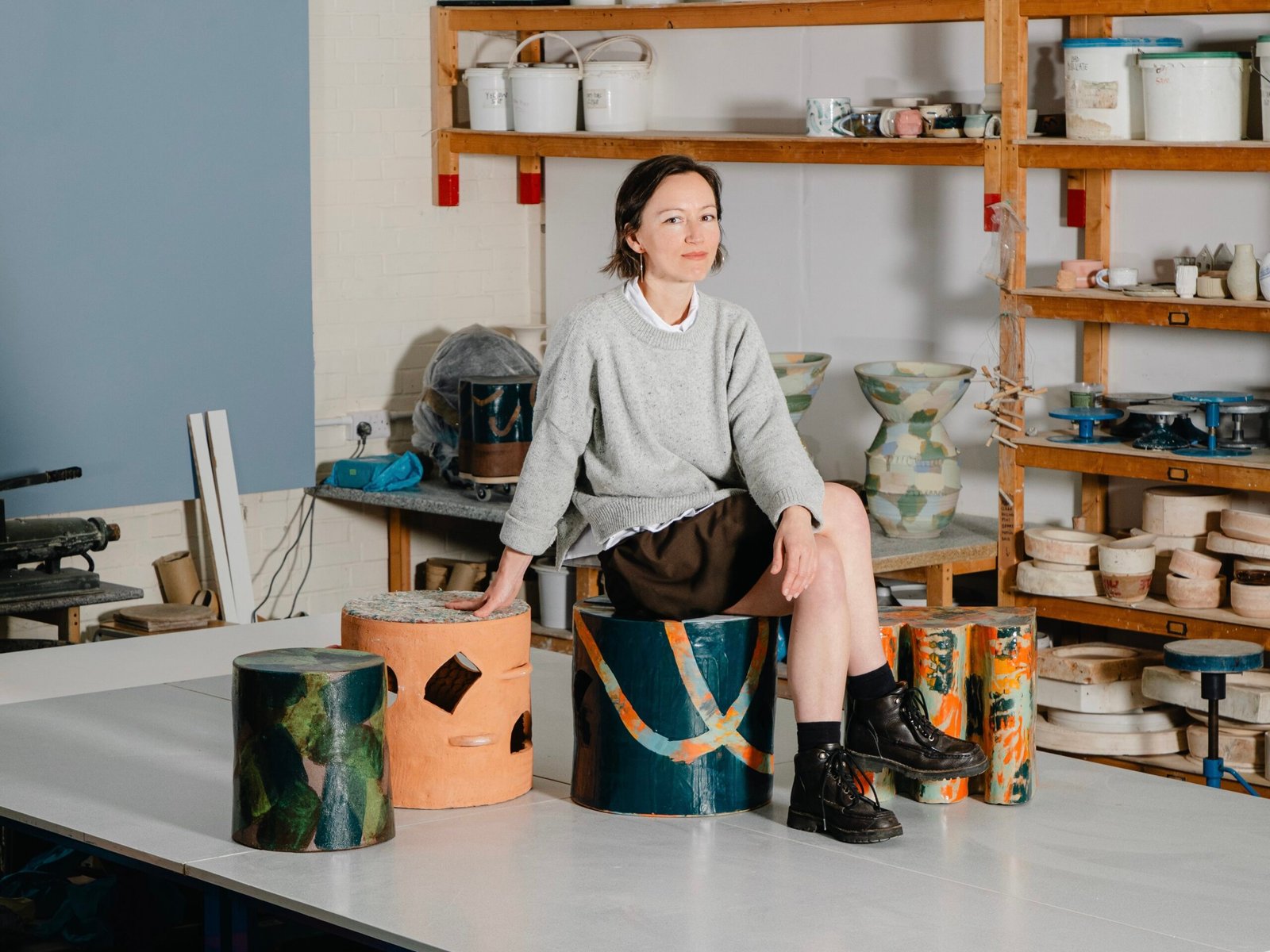
Photo: Jorge Antony Stride
For ceramic artist Carla Wright, clay is not just a material but a way of connecting. Her work draws on personal memory, community spaces, social care and the quiet, often overlooked forms of support that exist between people. I met with Carla to talk about her recent exhibition The Fuddling Gossips at Devonshire Collective, and how gossip, care, and collaboration continue to shape both her practice and her community studio, Common Clay.
The idea for The Fuddling Gossips began with memories of her own childhood. Carla grew up in a very social, female-led household with a young single mother, where the flow of conversation was constant. Women gathered in kitchens, house parties spilled out onto doorsteps, tea in hand. As a child, she absorbed everything. “It wasn’t just talk. It was a support system, a way of processing life together. I came to really admire the depth of connection and knowledge that came through these informal, everyday exchanges.”
Rather than seeing gossip as idle chatter, Carla began to think of it as a language in itself, one that plays a crucial role in holding relationships and communities together. She drew on Ursula K. Le Guin’s essay Bryn Mawr Commencement Address, in which Le Guin distinguishes between the ‘father tongue’ – the language of institutions and authority – and the ‘mother tongue’, which is intuitive, relational and rooted in love and care. “For me, gossip fits into that ‘mother tongue’ space. It’s supportive, grounding, sometimes raw, but truthful in its own way.”
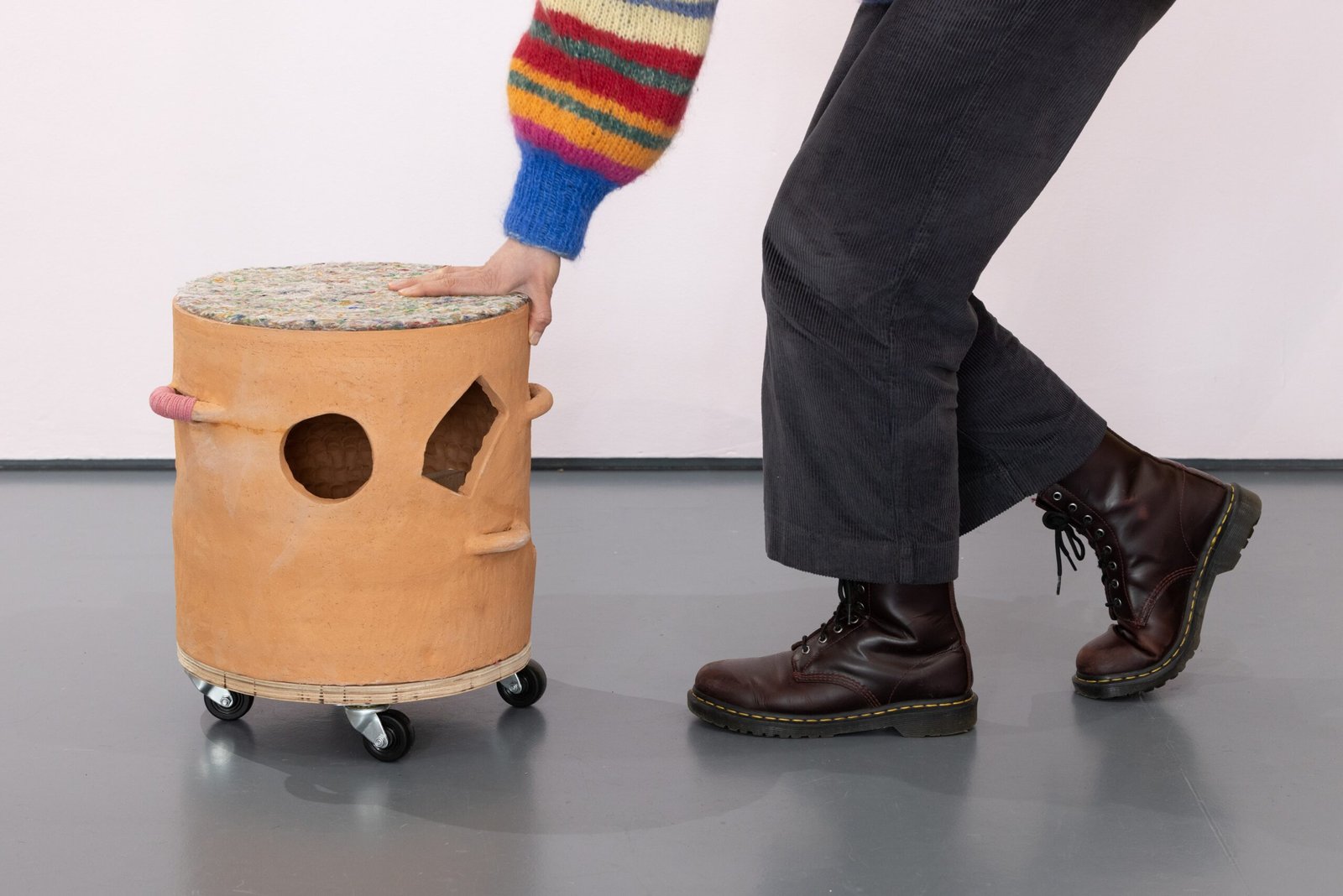
The exhibition unfolded across two rooms, reflecting different aspects of this idea. Upstairs, Carla created a celebratory communal space with moveable stools, wall-mounted ceramic pieces, books and archival photographs from youth spaces she remembered from her own childhood. The atmosphere was active and sociable, a place to gather, talk, read or just spend time together. Downstairs was quieter and more reflective, with low lighting, carpeted floors, and ceramic vessels containing recordings of women’s voices. The pots held snippets of everyday care: “my back’s killing,” “have you fed the dog?”, “you alright, babe?” Some of the vessels were linked together with tubes and openings, referencing the fuddling pot, a medieval drinking vessel that requires cooperation to use without spilling. Playful, but also a metaphor for the layered, interwoven nature of communication between women.
Much of Carla’s work returns to these spaces of informal gathering. Playgrounds, youth clubs, murals and community halls appear repeatedly, not just as aesthetic references but as emotional markers for the kinds of public spaces that help shape how people relate to each other. These spaces, she says, sit somewhere between the structure of school and the intimacy of home, offering young people their first taste of public life on their own terms. “They are flexible, intergenerational, unstructured and informal. They play an important role in how we learn to be with each other.” Many of these spaces no longer exist, either through underfunding or neglect, but Carla’s work reconstructs fragments of them – brutalist climbing frames, pastel linoleum floors, noticeboards and community centre furniture – as a way of remembering and celebrating what they offered.
Clay allows her to hold these memories physically, but it also mirrors some of the emotional ideas behind her practice. “Clay has a memory. If you shape something, drop or distort it, and then try to fix it, the clay often remembers that trauma. It can warp or crack in the kiln. I find that really interesting – how it registers stress or damage in a way that feels very human.”
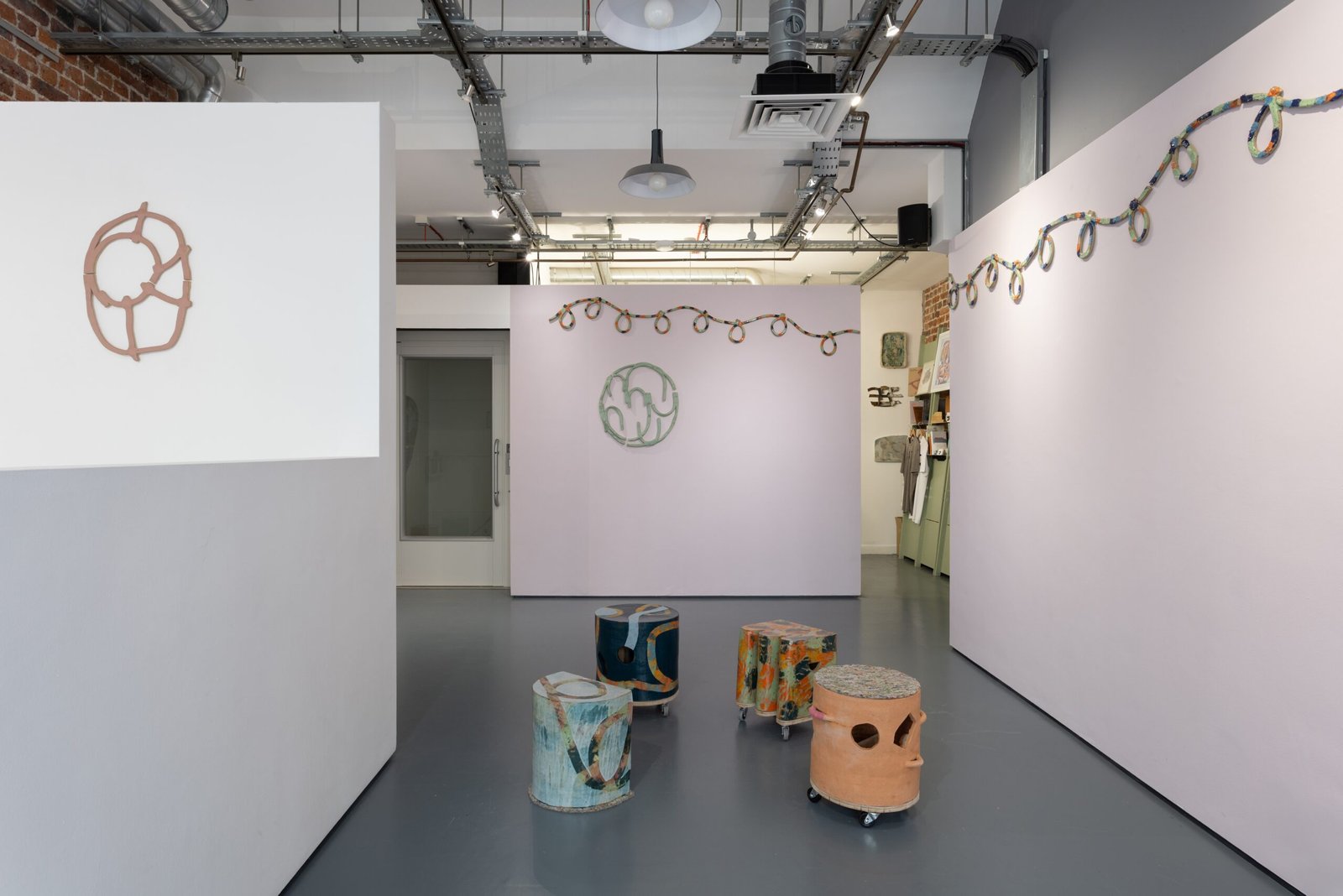
Photo: Rob Harris
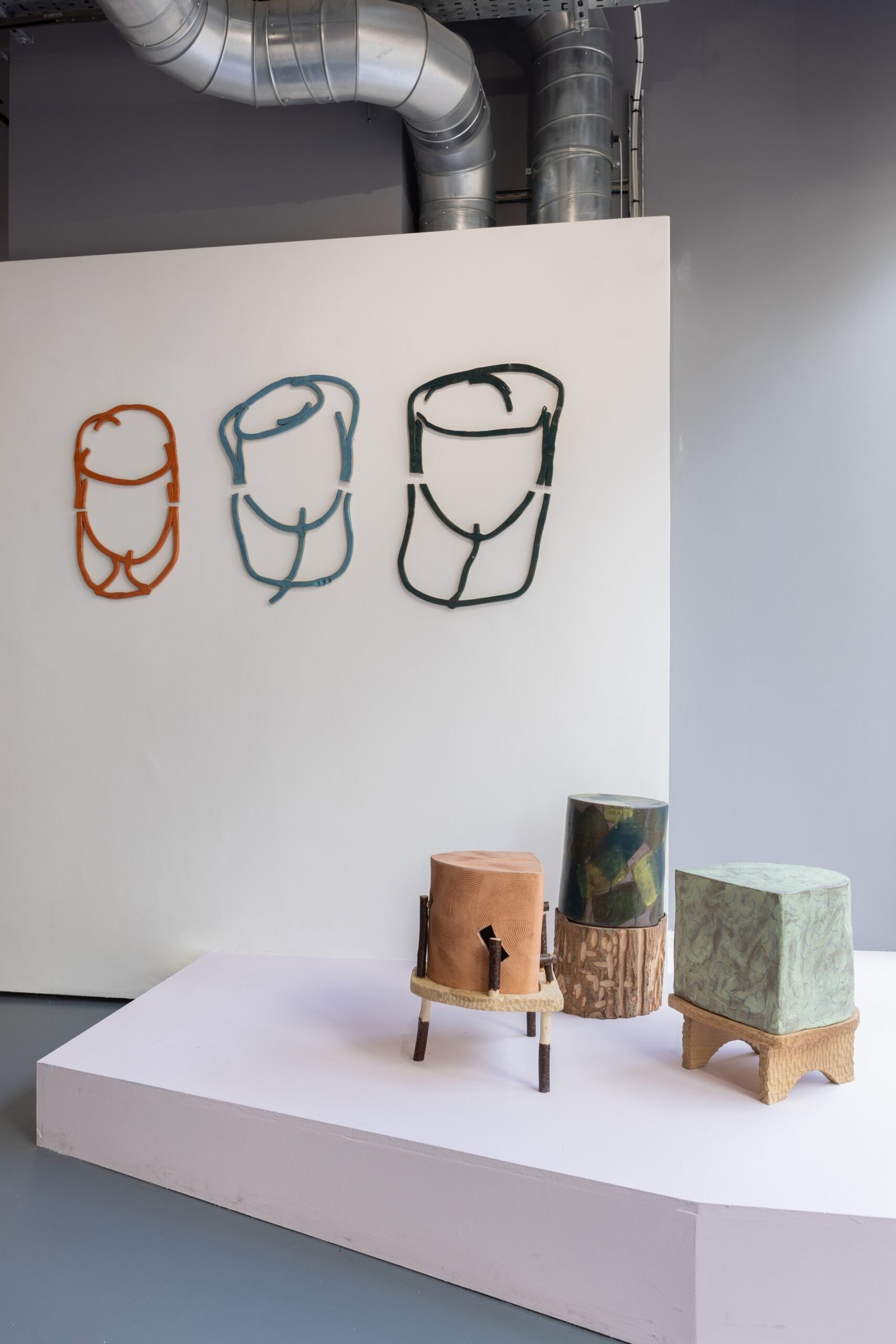
Photo: Rob Harris
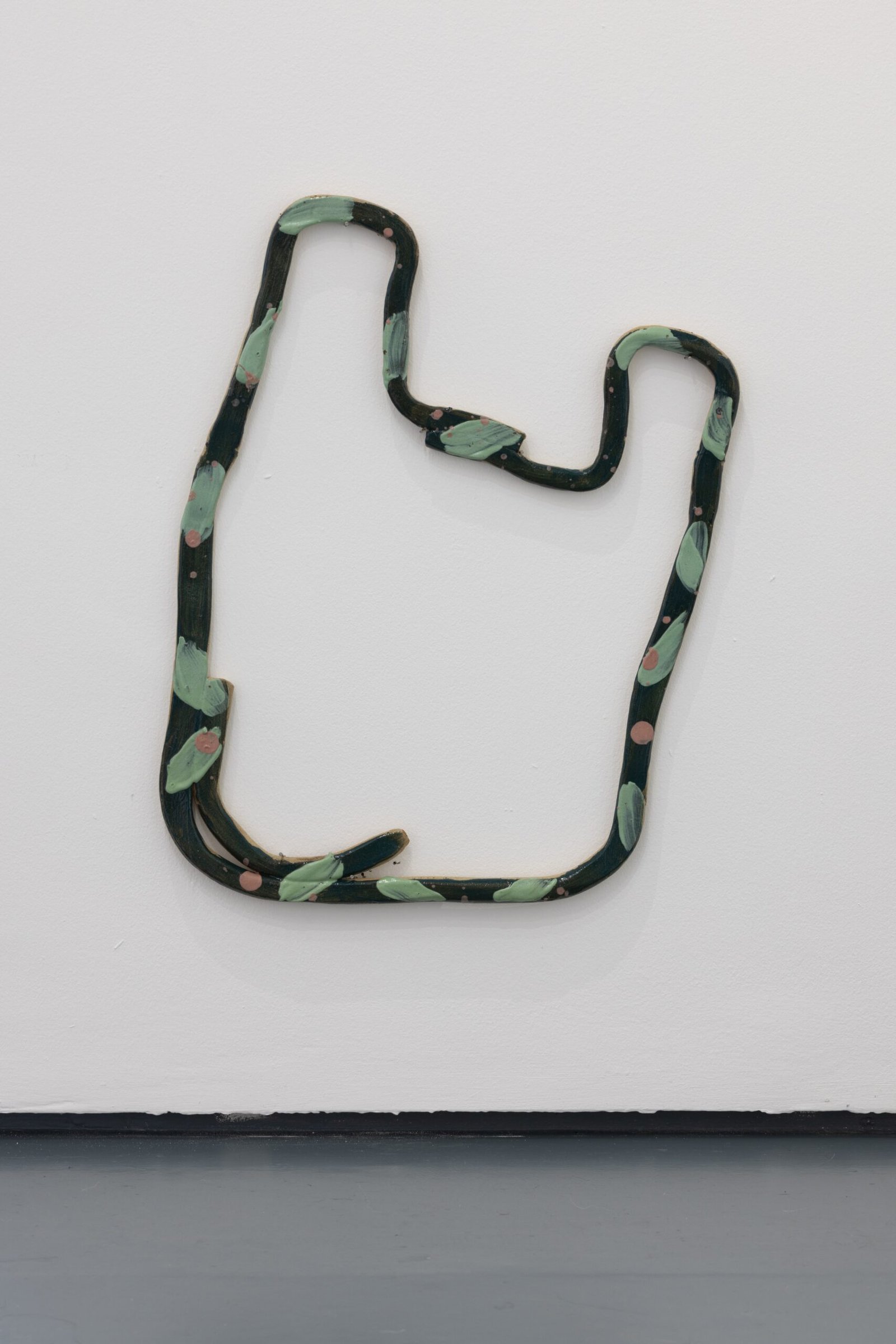
Photo: Rob Harris
Increasingly, Carla incorporates found and local materials into her work, collecting clay from streams and roadworks, rocks from beaches, plants from public spaces. These materials find their way into both clay bodies and glazes, allowing her to physically root her work in place. “When I started exploring ceramic materials, it became a way to root myself in a place that otherwise felt quite rootless. Incorporating these local materials became a way to reclaim something of its history.”
In part, this thinking was shaped by another of Le Guin’s essays, Being Taken for Granite, which helped Carla reframe how she thinks about the materials she works with. Le Guin contrasts granite – rigid and immovable – with mud, which is soft, heavy, and generative. “That helped me think about materials not just physically but symbolically. I like the idea of rocks becoming fluid again, flowing like lava. Hard materials like granite and quartz get broken down, ground and melted together in the kiln. They don’t naturally merge, at least not in our lifetimes, but through extreme heat and time, they begin to support each other. That gesture, bringing incompatible elements together and asking them to co-exist, feels very aligned with my ideas about community and collaboration.”
Community is central to Carla’s practice, not just thematically but in the way she works day-to-day. Common Clay, the ceramics studio she runs in Bexhill, has grown slowly and organically from a small space shared with a handful of members into a thriving shared studio with teachers, assistants and a growing programme of workshops and residencies. It began, she says, without a grand plan. A friend offered to sell her the contents of a ceramics studio he had inherited, for whatever she could afford. “From there, I taught myself how to run a studio – learning about kilns, materials, and the logistics of shared making as I went.” Growth came gradually, led by demand and guided largely by instinct. “I often make decisions from a place of intuition, which helps keep things open and flexible. Overthinking can be paralysing. I have this t-shirt from another clay studio, Dohm Ceramics, that says: ‘Get out of your minds and into your hands.’ That’s become a kind of mantra for me.”
Balancing the studio, her own practice, and family life has not always been easy, but recent years have brought a greater sense of rhythm. “Only recently does Common Clay and my own practice now complement each other. They feed into one another in a way that feels natural and sustainable.”
The collaborative ethos behind Common Clay can be traced back to Carla’s earlier involvement with the artist-led collective Vulpes Vulpes. Without that experience, she says, she may not still be an artist today. “I didn’t have the means to not work full-time, or a family home to fall back on – so life, work, and making art were all folded into that space.”
Vulpes Vulpes was founded initially through squatting and alternative living, later evolving into a collective that ran exhibitions, residencies, workshops and even a housing co-operative. For Carla, it offered not just a platform but a model of how artistic and personal lives could be sustained through shared responsibility and mutual support. “We shared care, resources and responsibility. It taught me the kind of artist I wanted to be.”

Photo: Rob Harris
That way of working still informs her approach today. “While I currently lead Common Clay, we have a brilliant group of artists involved, and I hope to move toward a more co-operative structure over time. These things take patience. But the values – accessibility, care, informality, sustainability – remain the same.”
Recent years have seen Carla’s work become more participatory and multi-sensory, incorporating movement, sound, and audience interaction. It’s something of a return to her earlier practice, before ceramics, which also involved participatory elements. With greater technical confidence in clay, she has been able to bring those aspects back into her installations. “I’m always thinking about how people can access the work – physically, through touch, movement, crouching low and close to hear a sound, or playfully shifting objects around – but also emotionally, through showing visible repairs, relating to imperfection and failure.”
She often breaks traditional pottery rules deliberately, leaving joins, gaps and visible marks of construction, while still ensuring her pieces are strong and durable. “When something is perfectly made, beautifully presented on a plinth, with no visible signs of how it was constructed, it can create a sense of distance or awe that separates the viewer from the work. I want people to feel connected to it.”
Sound has also become an important element in her work, allowing the vessels to hold not just physical forms but voices and intimate moments. In The Fuddling Gossips, recordings of women’s voices were embedded inside the ceramic forms, bringing the community quite literally into the work. “The vessel becomes an amplifier, or a holder of voices. I was trying to find a way to bring the people in my community into the work in an intimate and respectful way.”
That exploration continues. Carla is currently working towards a new exhibition at County Hall in London, in collaboration with singer Isobel Anderson, further developing the sculptural and sonic possibilities of her work. “I’m continuing to explore how ceramics can amplify or distort sound, thinking more about the structure of the ‘sound pots’, with their openings acting as listening ears or loud mouths.”
At the same time, Common Clay has recently launched its first residency programme in partnership with the Working Class Creatives Database, offering eight-month residencies to artists from low socio-economic backgrounds. It’s an important step in Carla’s commitment to making ceramics studios more inclusive and accessible. “Ceramic studios in the UK are often very white, middle-class spaces, and we’re committed to trying to challenge that.”
Throughout it all, whether in the studio, the workshop, or the gallery, her focus remains on finding ways to hold people together, both materially and socially. The forms may be hand-built, imperfect, and visibly repaired, but they carry within them the quiet resilience of care, conversation and community.
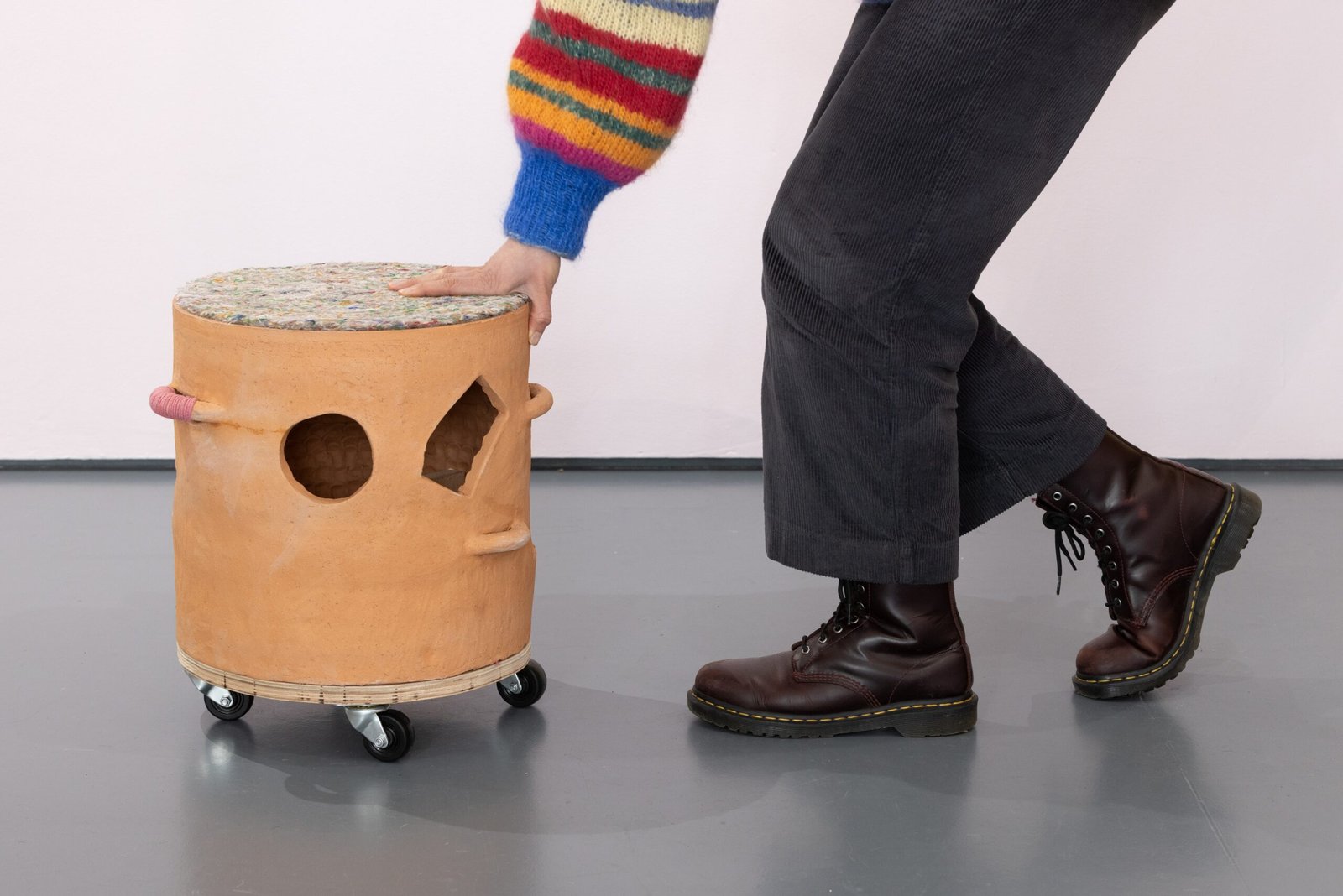
Photo: Rob Harris
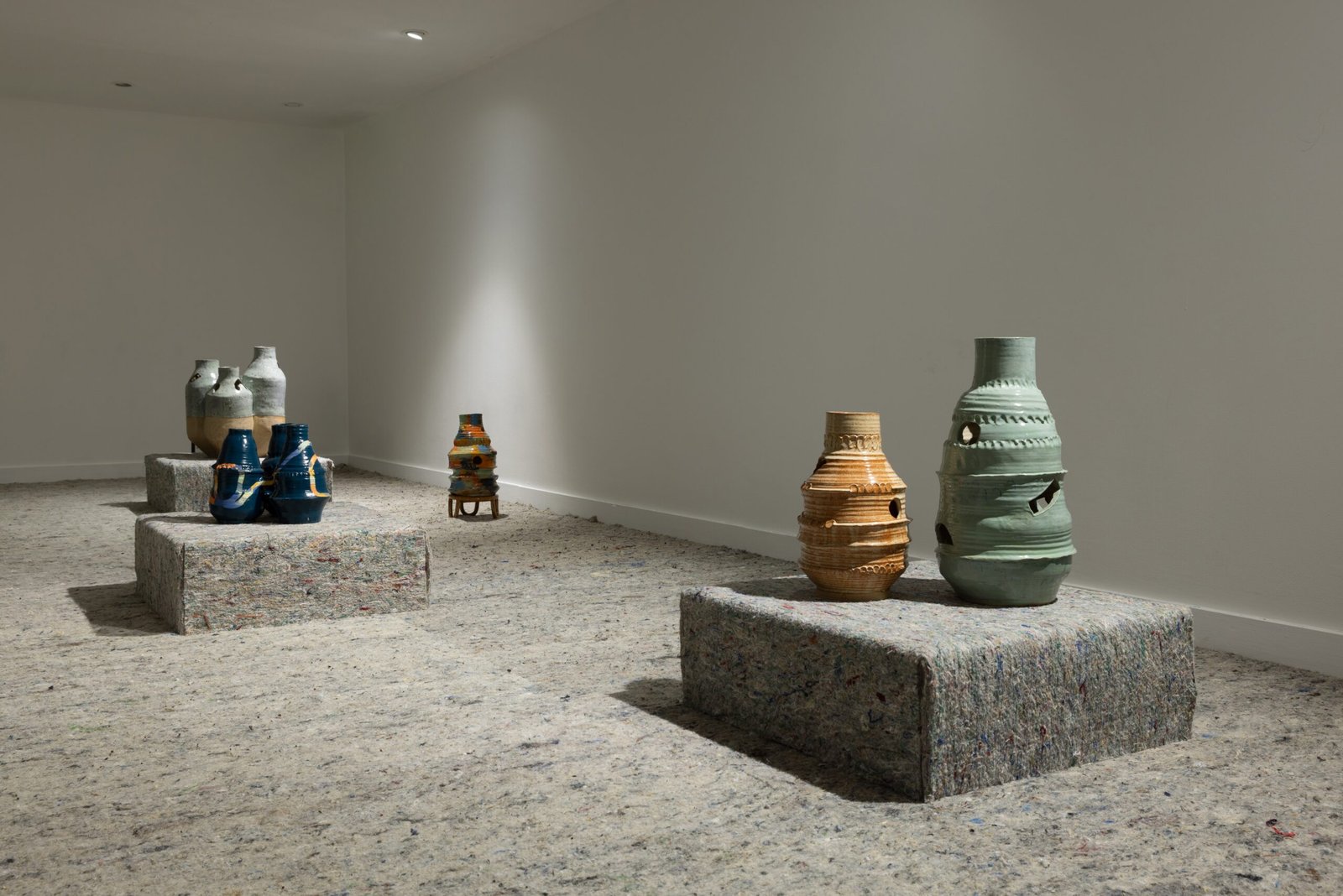
Photo: Rob Harris
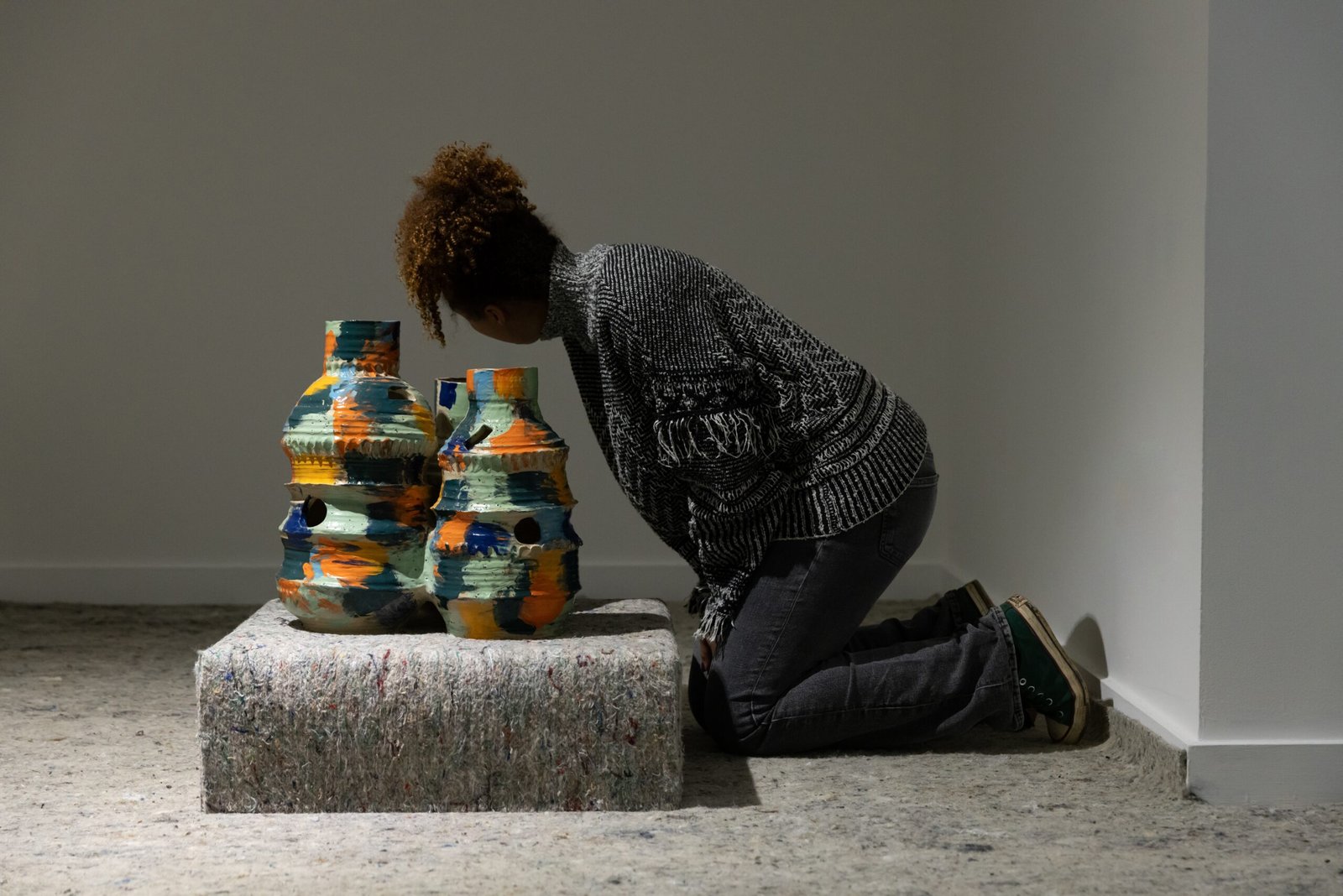
Photo: Rob Harris
More Media
February 11, 2026
In this conversation George speaks with Yeni Mao in his Mexico City studio. This episode is released to coincide with Mexico City Art Week 2026 when Yeni will be exhibiting with Brooke Benington at the Material Art Fair as well as other projects across the city. They the importance of communities and subcultures in his sculpture practice and his artistic journey, including living and working in New York before moving to Mexico City and in doing so finding a new and growing audience for his work.
January 27, 2026
In this first episode of season 2; George visits Jane Hayes Greenwood in her South East London studio, shortly before her solo exhibition Weird Weather at Ione & Mann with Castor, in London. The discus Jane's evolution as an artist and returning home to the Yorkshire landscape of her childhood as she begins to process the passing of her mother through her latest series of paintings.
October 30, 2025
In this episode, George visits Adeline de Monseignat in her Mexico City studio, recorded during Mexico City Art Week in February 2025. It’s a warm conversation between friends that traces Adeline’s path from living and working in London to building a practice in Mexico City. They revisit the early steps of her career, how her sculpture has evolved, and the threads that run through it.
June 17, 2025
We talk with Carla to talk about her recent exhibition The Fuddling Gossips, and how gossip, care, and collaboration continue to shape both her practice and her community studio, Common Clay.